News
Bachelor’s or Master’s Degree? Which Should You Prioritize to Increase Your Chances of Landing a Job
Public and private organizations require different degrees and academic credentials in their job postings; however, which of these is crucial for applying?
Many professionals put off their studies for various reasons; therefore, it is important to recognize which degrees and qualifications are essential when looking for a new job, as this can determine whether you are accepted or excluded from the job posting.
Importance of a Bachelor’s Degree vs. a Master’s Degree
“The bachelor’s degree carries much more weight, at least in Peru,” begins Víctor Mendoza, CEO of Innova Hunting Group. The specialist explains that there are professions that cannot be practiced without a degree, so it is crucial for a high school graduate to pursue a bachelor’s degree if they want to find
a new job.
Meanwhile, Alejandro Luna, Senior Manager of Supply Chain and Manufacturing at Cornerstone, explains
that a bachelor’s degree is essential for standardizing educational levels, but a master’s degree can help a professional stand out in certain specific roles.
The importance of academic degrees and credentials in the search for a new job will depend on the field of work.
“Careers such as accounting, environmental science, law, geology, teaching, engineering, and psychology require a degree. It’s almost mandatory because, without the degree, they cannot sign documents or
perform their duties in the workplace, as companies may significantly restrict them,” says Víctor Mendoza.
However, Alejandro Luna believes that a master’s degree carries more weight, for example, for professionals
in the financial sector, in areas such as banking or consulting.
Hugo Aguirre, a professor at the Pontifical Catholic University of Peru, concludes that both the undergraduate degree (bachelor’s) and the master’s degree are important because the undergraduate program provides specialized theoretical and practical tools, while the master’s degree is an educational complement that can be hyper-specialized in theoretical and research training aimed at a doctorate.
“For those who want to pursue an academic career, that path leads to a doctorate, but for most people seeking professional advancement, a master’s degree is important because it is increasingly required in the job market as a prerequisite for certain types of work,
” he notes.
What degree is required for job positions?
Job postings detail the professional profile the organization requires and list the degrees or academic qualifications the applicant must hold. In this case, the applicant must meet all requirements; otherwise, they may be disqualified.
“The candidate may be eliminated from the job posting if they do not meet the required degree. Usually, it is considered necessary for managers to hold a bachelor’s degree and a master’s degree, in addition to the experience and knowledge required to perform certain activities,” explains Hugo Aguirre.
What happens in the case of a promotion?
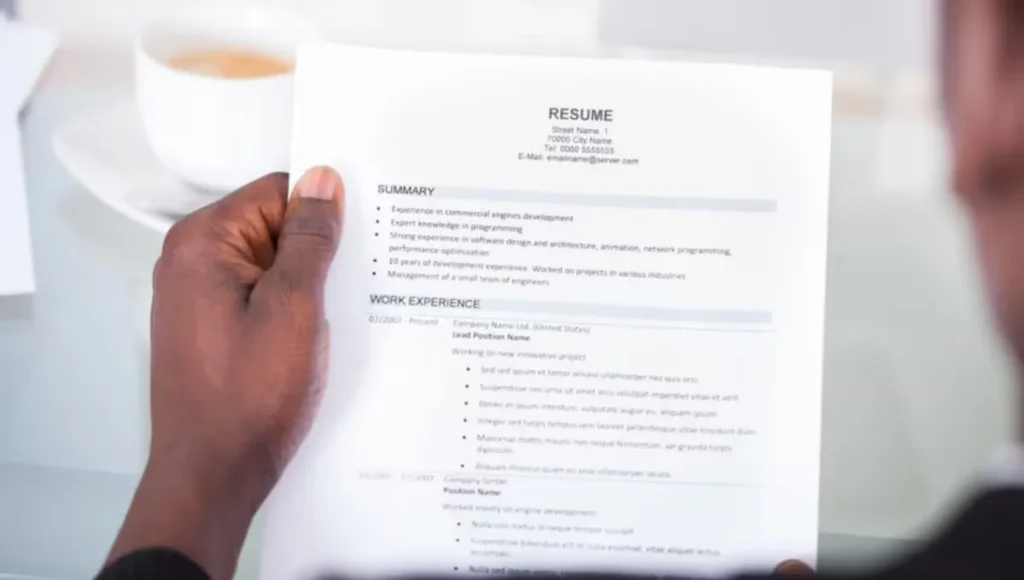
To promote an employee or increase their salary, the Human Resources department evaluates their competencies—that is, whether they work well in a team, are a good leader, and possess the necessary soft skills. However, they may also evaluate the academic degrees listed on the resume.
“It’s a helpful factor because it shows you have more specialized knowledge or have supplemented certain areas—for instance, you might have a bachelor’s degree in one field and then a master’s in another. It definitely carries weight in promotions, or if you have to choose between two people with similar experience, a master’s degree or specialization can be a differentiator,” explains Alejandro Luna.
Is an international master’s degree equivalent to a university degree?
Víctor Mendoza believes that master’s degrees earned in another country carry significant weight on a resume; however, in professions that require a university degree to practice, they are not a priority “due to the issue of signing documents.”
“No, because you might have earned a master’s in accounting from the best university in the United States, but if you haven’t earned a degree in Peru, they won’t hire you because you won’t be able to sign documents. That’s the reality in Peru because in other countries, there isn’t even a degree requirement,” he explains.
Fact:
Víctor Mendoza and Hugo Aguirre note that out of 10 professionals over the age of 25, 5 hold a university degree. This is attributed to some young people’s lack of interest in obtaining a degree, their financial constraints, and a lack of time.
It is important to reiterate that whether a professional holds a degree depends on their field of study. In professions where a degree is required to practice, most professionals hold one, while in fields where it is not required, they do not. Finally, specialists consider pursuing graduate studies to secure better job opportunities and/or be selected for promotions.